Camino Portugués
242 kilómetros desde Porto hasta Santiago de Compostela
El Camino Portugués (Caminho Português en portugués – llamado también Camino Portugués Central/Caminho Português Central) sigue la ruta tradicional del interior desde Portugal hasta Santiago de Compostela. Desde Oporto, sigue un antiguo corredor norte-sur por el norte de Portugal, con tramos asociados a la Vía XIX romana, antes de cruzar el Miño entre Valença y Tui.
Los históricos pasos fluviales de Barcelos, Ponte de Lima y Valença-Tui siguen siendo puntos de referencia importantes a lo largo de la ruta. Entre Oporto y Valença también verás flechas azules que apuntan hacia el sur, en dirección a Fátima, y señalan los tramos compartidos con el Caminho de Fátima.
Lugares de interés del Camino Portugués

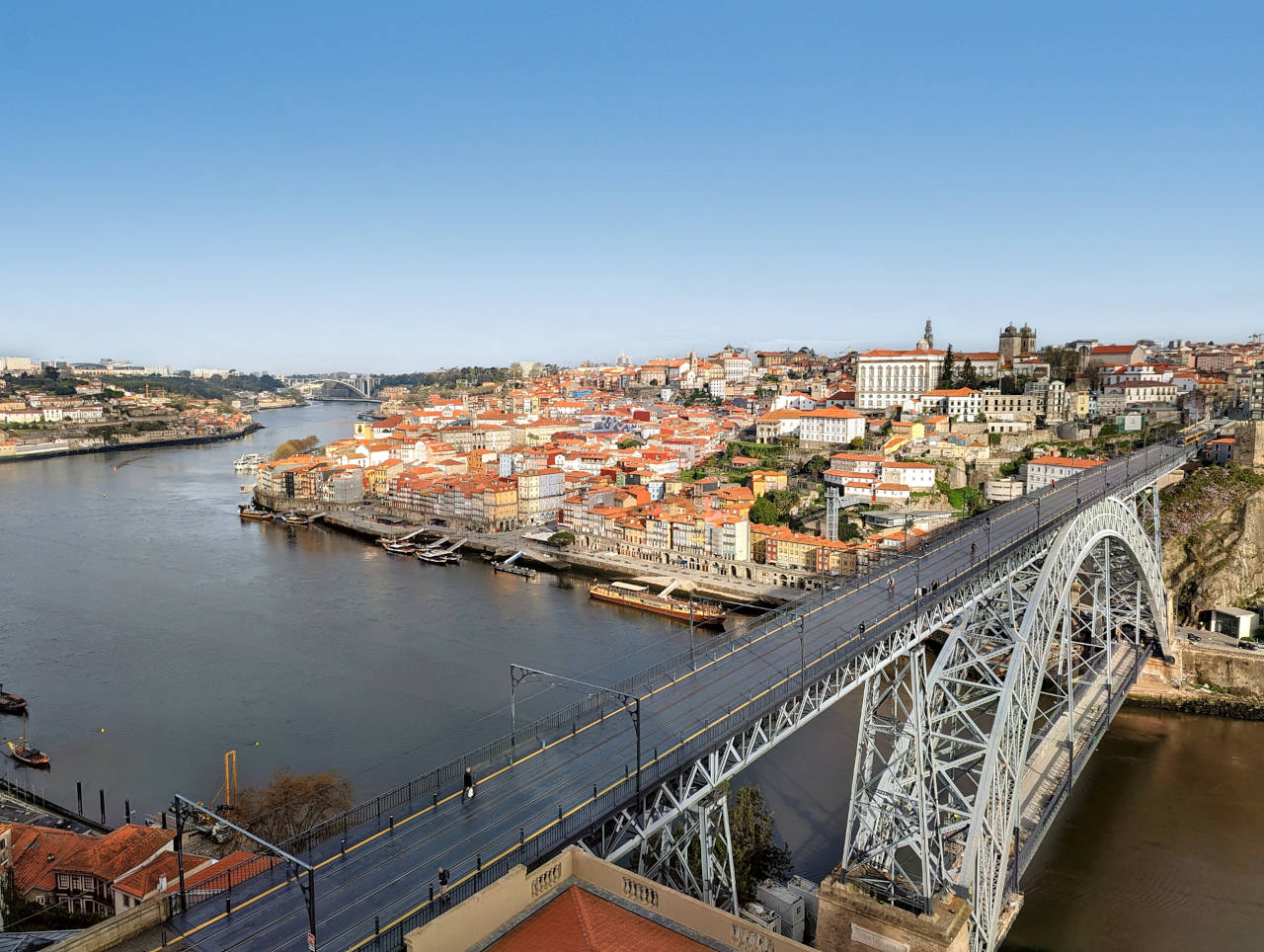
Porto
Oporto se desarrolló en torno a la colina que se alza sobre el Duero, donde tomaron forma la ciudad medieval y su catedral. El nombre Portucale, utilizado para designar Oporto y el territorio circundante durante la Alta Edad Media, acabó dando nombre a Portugal.
Su situación en el punto practicable más bajo para cruzar el Duero convirtió Oporto en un paso entre el norte y el sur de Portugal. Para los peregrinos que llegaban desde el sur, el camino subía desde el río por la ciudad medieval antes de continuar hacia el norte, rumbo a Santiago de Compostela.
Hoy Oporto es uno de los principales puntos de partida del Camino Portugués Central y del Camino Portugués de la Costa.

Valença
Valença nació como el asentamiento medieval fortificado de Contrasta, nombre que significa «la que está enfrente», frente a Tui, al otro lado del río Miño. Tras los repetidos conflictos en la frontera luso-gallega, Afonso III amplió sus defensas y la rebautizó como Valença en 1262.
El casco antiguo sigue dentro de la fortaleza, separado de la ciudad moderna, que se extendió fuera de las murallas. Para los peregrinos, Valença es también la última localidad de Portugal antes de que el Camino cruce el Miño y entre en Galicia.

Tui
Tui se alza sobre el río Miño, frente a Valença, con calles medievales que ascienden desde el río hacia su catedral fortificada. Sede episcopal desde el siglo VI, más tarde fue capital de una de las siete provincias del Reino de Galicia, al igual que Betanzos y Santiago de Compostela.
En Tui, el Camino Portugués entra en Galicia desde Portugal. También es un punto de partida habitual para los peregrinos, pues se encuentra a más de los 100 km mínimos a pie de Santiago necesarios para obtener la Compostela.

Pontevedra
Pontevedra es la capital de la provincia de Pontevedra, aunque Vigo es más grande. Su nombre procede de Ponte Veteri («puente viejo»), el paso romano sobre el río Lérez que precedió a la actual Ponte do Burgo.
Durante los siglos XV y XVI, Pontevedra fue el principal puerto de las Rías Baixas, gracias a la pesca, la salazón y el comercio marítimo. Gran parte de esta riqueza se concentraba en A Moureira, el barrio marinero cuyo Gremio de Mareantes ayudó a financiar la Basílica de Santa María a Maior.

Santiago de Compostela
Santiago de Compostela se desarrolló en torno a una tumba que el obispo Teodomiro identificó a comienzos del siglo IX como la del apóstol Santiago, aunque esta atribución se basa en la tradición religiosa y no en pruebas históricas. El rey Alfonso II de Asturias viajó hasta el lugar y ordenó construir una iglesia sobre la tumba. Así contribuyó a establecer la peregrinación que marcaría la ciudad durante siglos. La construcción de la actual catedral románica comenzó en 1075. A su alrededor creció una ciudad medieval que atendía a los peregrinos llegados de toda Europa.